Fall Prevention Strategies for Helicopter Utility Operations
- david58701
- Nov 5, 2025
- 3 min read
Helicopter utility operations involve working at heights, often in challenging environments. Falls during these operations can lead to severe injuries or fatalities. Preventing falls is critical to protect workers and ensure mission success. This post explores practical strategies to reduce fall risks in helicopter utility work, focusing on safety measures, equipment, training, and operational best practices.
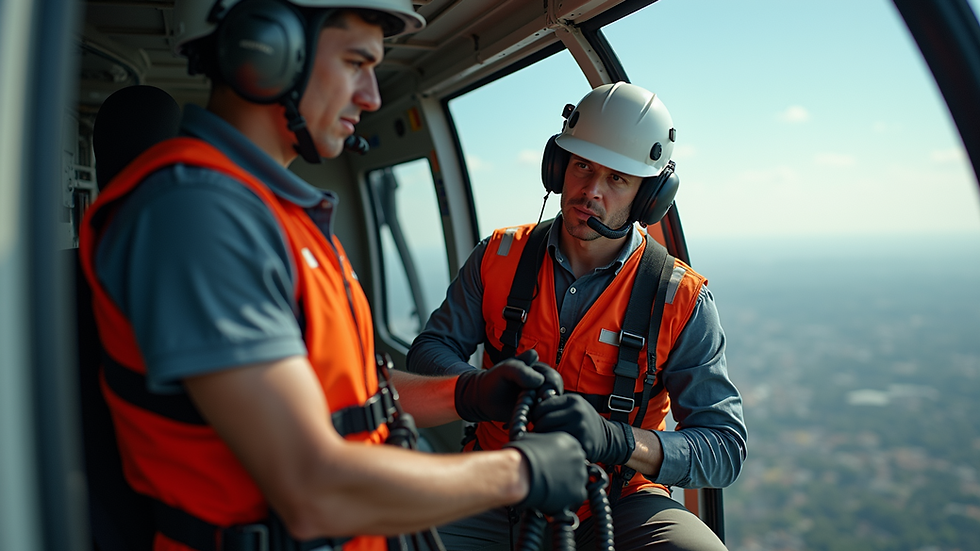
Understanding Fall Risks in Helicopter Utility Work
Helicopter utility operations include tasks such as power line maintenance, construction support, firefighting, and aerial inspections. These activities often require personnel to work on or near helicopter platforms, landing skids, or elevated structures. The risk of falling arises from:
Unstable footing on helicopter surfaces or uneven terrain
Sudden helicopter movements caused by wind or pilot maneuvers
Limited visibility during night or adverse weather conditions
Distractions from complex tasks or communication challenges
Inadequate safety equipment or improper use
Recognizing these risks helps in designing effective fall prevention strategies tailored to the unique demands of helicopter utility operations.
Essential Safety Equipment for Fall Prevention
Using the right safety gear is the foundation of fall prevention. Key equipment includes:
Full-body harnesses designed for aerial work, providing secure attachment points
Lanyards and lifelines with shock absorbers to reduce impact forces
Anchor points on helicopters or nearby structures rated for fall arrest loads
Non-slip footwear to improve grip on slippery or uneven surfaces
Helmets with chin straps to protect against head injuries during falls
Regular inspection and maintenance of this equipment ensure reliability. For example, harnesses should be checked for wear, frayed straps, or damaged buckles before each use.
Training Workers to Prevent Falls
Training is vital to ensure workers understand fall hazards and how to use safety equipment correctly. Effective training programs cover:
Proper harness fitting and adjustment to avoid discomfort and ensure safety
Correct attachment to anchor points and understanding load limits
Safe movement techniques on helicopter platforms and around equipment
Emergency procedures for rescue and self-recovery after a fall
Communication protocols to coordinate movements and alert others to hazards
Hands-on drills and simulations help workers practice fall prevention skills in controlled settings. For example, training may include practicing secure attachment while boarding or exiting a helicopter.
Operational Practices to Reduce Fall Risks
Beyond equipment and training, operational procedures play a key role in fall prevention:
Pre-flight safety briefings to review fall hazards and safety measures
Clear communication between pilots and ground crew to coordinate movements
Limiting personnel on helicopter platforms to reduce crowding and distractions
Using spotters to monitor worker safety during critical tasks
Scheduling work during favorable weather conditions to avoid slippery surfaces or strong winds
For instance, a utility crew might delay work if wind speeds exceed safe limits for helicopter stability.
Designing Helicopter Platforms for Safety
Helicopter platforms and landing areas can be designed or modified to reduce fall hazards:
Installing guardrails or safety nets around platform edges
Using textured, non-slip surfaces on platforms and steps
Providing secure handholds for workers to maintain balance
Ensuring adequate lighting for night operations
Marking hazard zones clearly to alert workers to fall risks
These design features create a safer environment and support workers in maintaining stability during operations.
Case Study: Fall Prevention in Power Line Maintenance
A utility company performing power line repairs using helicopters implemented a comprehensive fall prevention program. They introduced:
Mandatory full-body harnesses with double lanyards
Anchor points installed on helicopter skids
Regular training sessions with fall arrest drills
Pre-task safety meetings emphasizing fall risks
Use of spotters to assist workers boarding and exiting helicopters
As a result, the company reported zero fall-related incidents over two years, demonstrating the effectiveness of combining equipment, training, and procedures.
Emergency Response Planning
Even with strong prevention measures, falls can still occur. Preparing for emergencies is essential:
Develop rescue plans specific to helicopter utility scenarios
Equip crews with rescue tools such as ropes and stretchers
Train workers in first aid and fall injury response
Establish clear communication channels for rapid emergency notification
Coordinate with local emergency services for helicopter rescue support
Quick and effective response can reduce injury severity and save lives.
Summary
Fall prevention in helicopter utility operations requires a multi-layered approach. Using proper safety equipment, providing thorough training, following safe operational practices, and designing safer work environments all contribute to reducing fall risks. Preparing for emergencies ensures that if falls happen, workers receive timely help. By prioritizing these strategies, utility teams can protect their personnel and maintain safe, efficient helicopter operations.
Take the next step by reviewing your current fall prevention measures and identifying areas for improvement. Safety starts with awareness and action.


Comments